

Remembering the mighty Beech Tree
Exploring the Western NY Wilds By Bob Confer
The Erie Canal towpath was once the interstate for itinerant workers — hoboes, if you will — who traveled from town to town in search of their next farming or handyman gig. While doing so, they frequently stopped over on my family’s farm. It was an attractive spot to set up camp because of the fresh water they could drink from a brook that runs through our woods, the same brook from which they ignited bubbling gas for cooking (there is a good reason the community is called Gasport).
While there, they often killed time by carving their names and other things in the bark of the beech trees that were common in our woods. The smooth gray bark, so easy to cut with a pocketknife, has always been inviting to amateur artisans, not to mention young lovers who wanted their names forever inscribed in Mother Nature for all the world to see. The hoboes, the romantics, and anyone else interested in making a statement left their calling cards on the beeches — old-fashioned graffiti that remains to this day. Those trees tell stories.
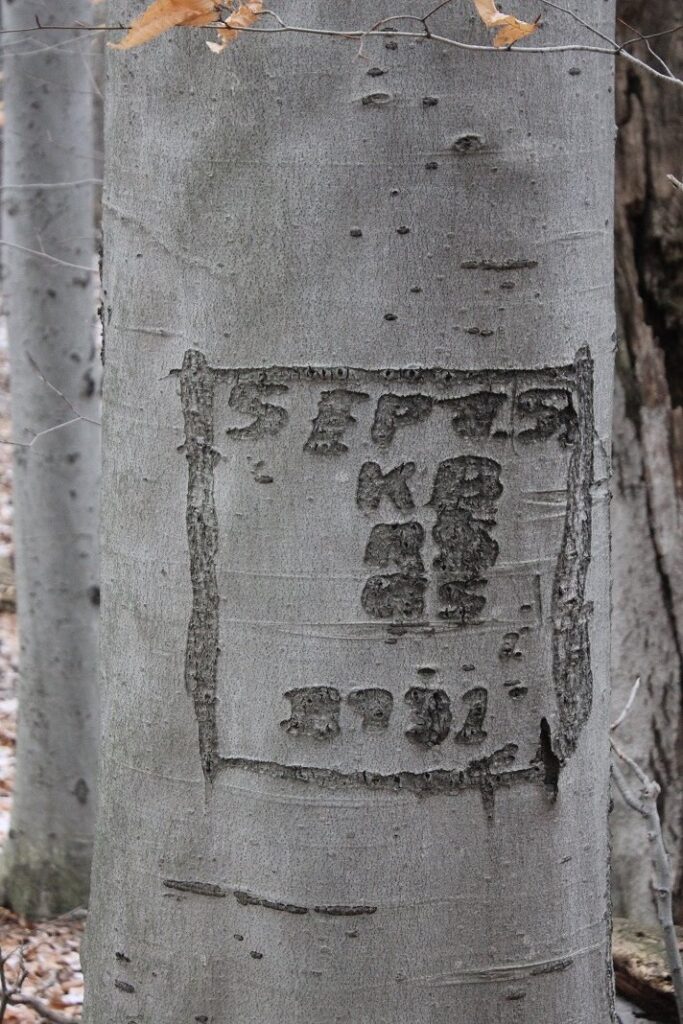
On the trees that were cut when they were mature and thus slower to grow, I can still make out dates from the early 1930s. Some of the handiwork, less legible as the tree grew, obviously came from much earlier times. There are names; some of them belonged to the hoboes, while others I recognize as locals who probably carved the tree when they were in their teens and 20s. Now, they are in their 70s and 80s and their arboreal artwork has aged less dramatically than they.

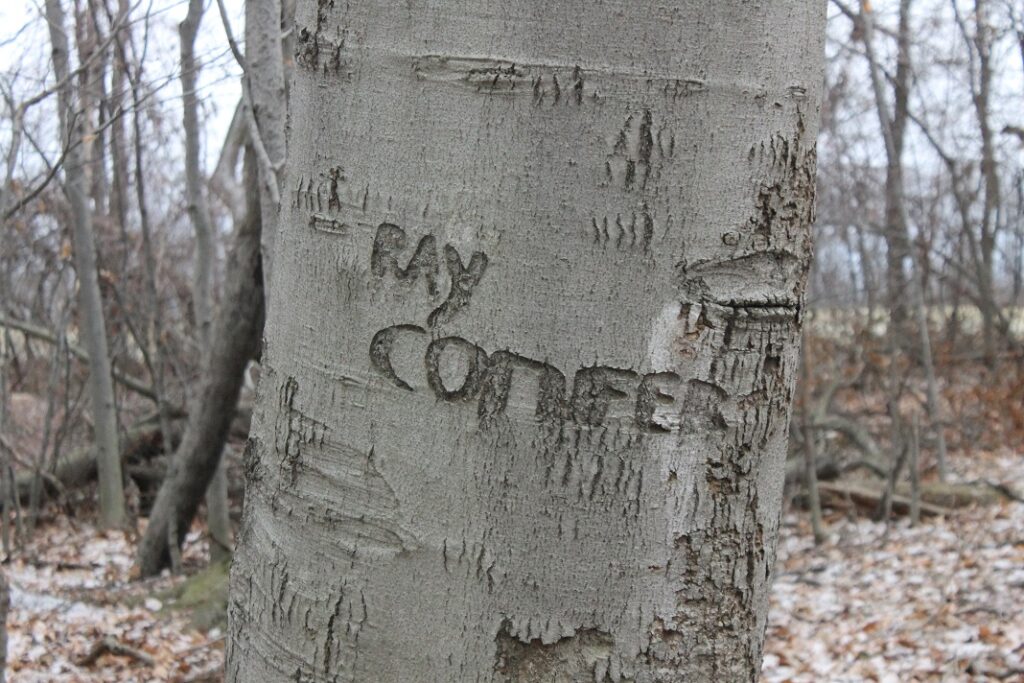
One of our beeches has neatly cut into its bark two words: “Ray Confer.” My grandfather did that when he purchased the farm in 1955 at 33 years of age. He has since passed, so that tree has always offered a comforting portal to a time gone by.
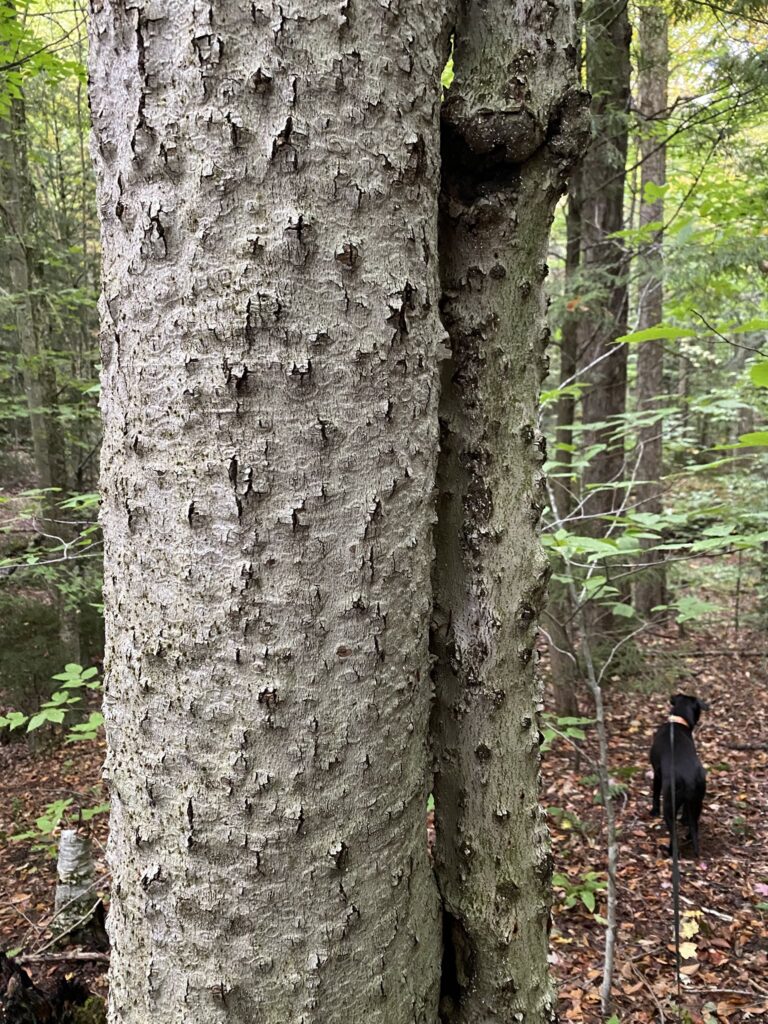
Sadly, all of these trees will, quite soon, no longer be able to tell their stories. About 18 years ago, beech bark disease reared its ugly head in Western New York in volume, bringing with it its deadly one-two punch. First, an insect – an invasive species, no less — attacks the bark. Then, the wounds left by the insects are infiltrated by a fungus. It doesn’t take long for the once-beautiful bark to crack then fracture completely, falling off the tree. The malnourished beech dies in 3 to 6 years of its first symptoms. Photo by Steve Boal
The disease has taken its toll on local forests, wiping out one of our most abundant trees, our best storytellers, and, with its beech nuts, an important provider of nourishment to wildlife. Every year, more of them topple within woodlots across the region, leaving behind small saplings that sprout off the roots but will never reach an appreciable height or fruit-bearing maturity.
It’s disheartening to think that the trees that should have outlived me won’t, taking with them the interesting connections I have to my family and the dozens of hardworking men who made their way across the region in hopes of overcoming the economic realities of their time.
Not one to let memories — better yet, history — die so pitifully, over the past few years I’ve taken photographs of the various trees and their carvings that remain. If you have a stand of beeches, especially one along the Erie Canal towpath or a rail line, you should take the time to do so, too, to familiarize yourself with the people who once called your fair community “home,” be it for years or just a few nights. By capturing the images on film we can maintain the carvings for the ages, just as their artists had intended.
Bob Confer’s Exploring the Western New York Wilds is a regular column born form a life of exploring and studying the WNY fields, forests, and waterways for a lifetime. You can reach him anytime, Bob@ConferPlastics.com
LItaliaOnline.com for takeout or delivery!! Tuesday – Saturday Lunch and Dinner!!