
A combination of algea and fungus is the fuel behind Santa’s herd
By Bob Confer, Follow Exploring the Western NY Wilds on Facebook
Kids everywhere know that Santa Claus subsists on Christmas cookies. Young, caring souls go out of their way to set aside a plate of the seasonal goodies for Saint Nick every Christmas Eve to make sure he has the energy to work his magic.
But, what about his ride? What do his reindeer eat? How do they fuel up for their intercontinental travels?
In the Far North of Canada and Eurasia, reindeer moss is an incredibly important food for caribou (also known as reindeer). It has been estimated that it provides 50% of the nourishment for the hoofed creatures in the summer months and 90% in the winter months.
Even though it is slow growing at just 3 millimeters per year, reindeer moss blankets the tundra and the understory of boreal forests, even after continual consumption by the caribou. It’s a ubiquitous part of the northern landscape.
While we aren’t the Far North, reindeer moss can be found in the higher peaks of Western New York. Its greatest abundance – and even then, it’s quite uncommon – is had at elevations in excess of 2,000 feet, such as in the mountains of Alma Hill and White Hill in Allegany County. That holds to the old naturalists’ adage that an increase in altitude is similar to an increase in latitude; the North is best replicated the higher you go.
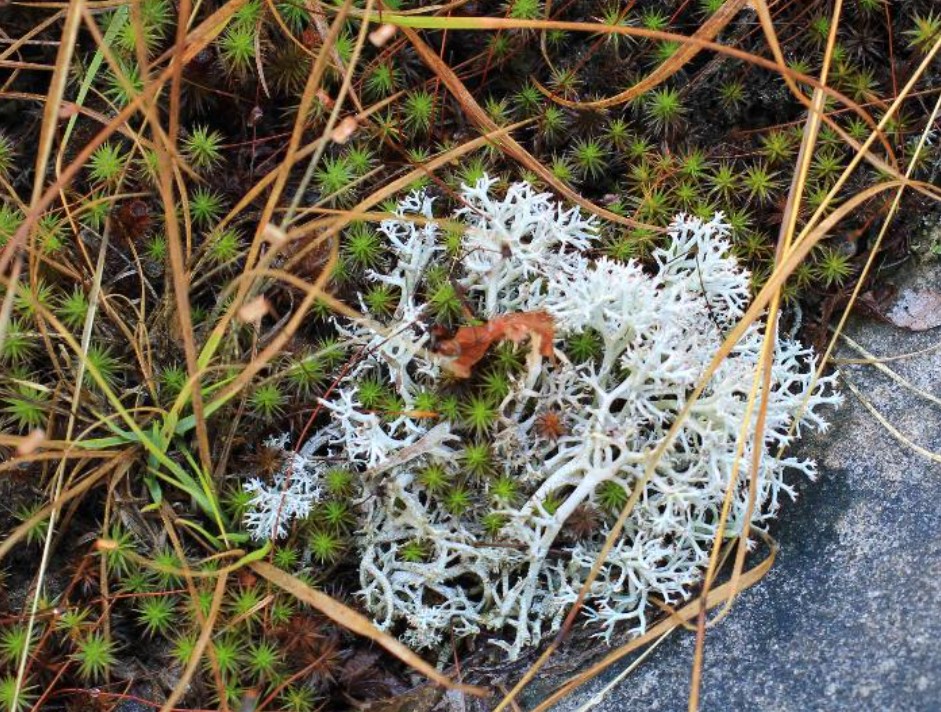
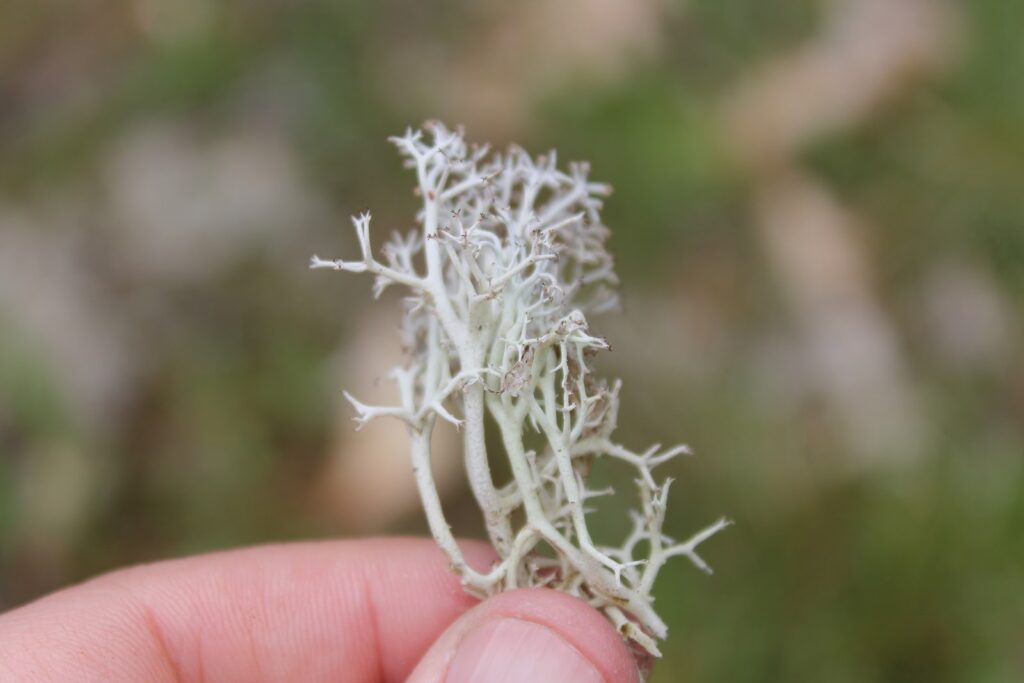
Reindeer moss can be found in disturbed sites in those mountains, like parking areas, hunting camps, or logged-out forests. It can be identified by its small height (no more than 3 inches), light-grey, almost white, branched appearance, very dry and crunchy feel, and the small colonies that it grows in.
Despite its name, it is not a moss. It is a lichen. Lichens are best described as a symbiotic, composite organism comprised of both algae and fungi. You are likely most familiar with the bluish-green, plate-like lichens that grow on trees and logs.

It has been said that reindeer moss is edible and is a great survival food. It’s probably classified as a survival food because you’d have to be in dire straits to eat it: It may be edible, but only in the loosest sense of the word. When sampled raw, it’s incredibly dry, like if you one day decided to munch on Styrofoam or straw. The flavor is moderately yucky due to its heavy acid concentration — it is tart and best compared to the taste of a pill, like aspirin or Tylenol, if you bit into, rather than swallowed, one.
Inuit have traditionally seemed to enjoy the flavor when it’s cooked. They first soak it with water, boil it a few times to get rid of the bad acid taste, crumble it, and then add it to breads, milk, and animal fats. It also makes a good thickener for soups and stews. After a few boilings and then cooking, it is said to have an earthy, mushroom-like flavor.
Beyond that, it could serve some medical purposes. Inuit use boiled reindeer moss water to fight diarrhea and kidney stones. It has been used to dress wounds and it also makes for a good sponge.
Just how good of a sponge is it? It sucks up everything…including fallout. With Chernobyl again in the news in recent years because of the Ukraine/Russia conflict, consider this: In Scandinavia, the lichens absorbed cesium-137 from the Chernobyl disaster of 1986, making them, and reindeer that eat them, radioactive to this day — almost 40 years later! Could that explain Rudolph’s shiny red nose?
The next time you’re hiking the high peaks of Allegany County and encounter this strange plant/fungus, admire it as a sort of treasure from Santa’s home and don’t disturb any colonies of these lichens…while quite common in New York’s Adirondack Park, they are very uncommon in Western New York. Leave it for the flying reindeer to enjoy when they need a rest stop during their Christmas deliveries.
Bob Confer is the founder and naturalist behind Exploring the Western NY Wilds, promoting all that is wild and wonderful from the Niagara frontier to hilltops of Alma NY. You can reach him anytime, Bob@ConferPlastics.com