

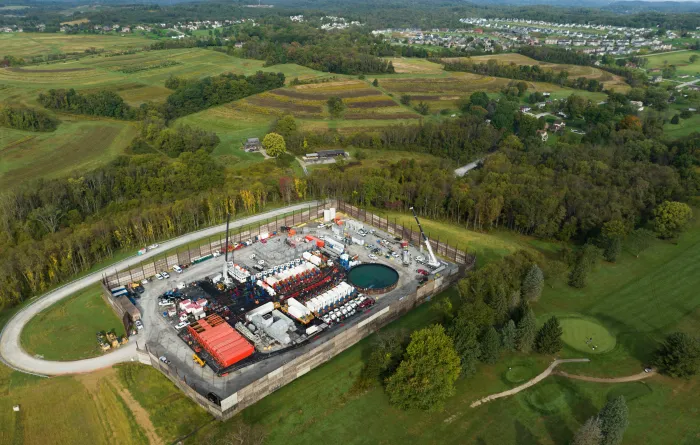
Hydraulic fracking has been banned by NYS law since 2021
A OPINION By Frederick Sinclair
Recently, Bruce Blakeman, candidate for Governor of New York State along with the candidates for Lieutenant Governor and Comptroller, joined Senator Borrello and Assemblyman Sempolinski, in an Olean rally which focused on “Calling for an end to New York’s Fracking Ban. “
They implied that the current high price of energy is the result of banning Fracking. There was a statewide Fracking moratorium (2008), executive ban (2015) and finally NYS law (2021) which permanently banned high volume hydraulic fracturing from use in drilling for natural gas. Fracking is the preferred, if not the only, method of extracting natural gas from the Marcellus (5000 foot) and Utica (7,000 foot) deep geologic formations, which are located beneath large areas of south western NY and Pennsylvania. Apparently this politically aligned Fracking support group is either not concerned about, or unaware of the NYS DEC and Health Department Environmental Impact Statement, prepared under State Law which mandates Environmental Quality Review (SEQR). The study clearly identified the negative impacts, of Fracking, to the environment and health of the communities. The negative impacts still outweigh the economic benefits of developing these sources of natural gas that are locked in the shale formations.

Unlike conventional drilling and extraction from traditional (shallower) porous geologies or pockets of natural gas, the Marcellus and deeper Utica shales must be entered via deep vertical penetration followed by miles of horizontal drilling into the strata. The bore holes and surrounding shale is then fractured via extreme pressurization, while injecting proprietary fluid chemical mixtures with micro silica sands that break apart, lubricate and prevent fissure closure. Here are some of the facts and negative impacts of Fracking:
- Aquifers and underground veins of water, supplying private and municipal wells, have routinely gotten polluted when in proximity of Fracking.
- The waste water from millions of gallons of fracking fluid (chemical cocktails) are hazardous and include radioactive liquid ( as high as 18,035 pCi/L) mixed with shale fragments that require specialized deep earth injection well disposal, and have to be trucked to Ohio for disposal.
- The drill cuttings from horizontal drilling are composed of hundreds of tons of drill operation cuttings that are polluted by drilling ‘mud’ (lubricants).
- The shale deposits are sediments that were deposited 390 to 450 million years ago, settling out from oceans which, at that time, were radioactive. The resulting shale beds are contaminated with decaying Uranium (4 billion year half life) and residuals of Radium 226, Radon, Polonium 210 and radioactive Lead 210.
- The natural gas from these deep shale formations is significantly more radioactive than the much shallower more recent (younger) gas formations.
These are just a sampling of the potential negative environmental issues identified, not only in the DEC and DOH issued Environmental Impact Statement but also voiced in the thousands of comments researched and offered by the public. In addition to the original study and resulting ban in NY, there is extensive documentation of what happened in Pennsylvania, where Fracking is allowed and Marcellus gas is being extracted. There have been hundreds of water wells polluted, lawsuits and settlements. Pollution of a pristine aquifer caused the shutdown of the wells feeding Coudersport Hospital . People, pets and entire herds of farm animals have been sickened. Municipal landfills were not able to accommodate the massive demand for disposal of cuttings and fracking waste streams. As a result, thousands of tons of drilling waste were disposed of in the privately owned municipal landfills and public waste water treatment facilities in Allegany and Steuben Counties. The leachate, sludges and stream discharges from these facilities have exhibited elevated levels of radium, and decaying daughter radionuclides. Brine discharges from gas well operations were being used as dust control on dirt roads throughout our region. DEC now requires radiological testing before dust control brine applications are allowed.
The ‘show stopper’, is that the Natural gas condensates deposit scale and sludge in the distribution infrastructure pipelines and pump stations etc. It has been disclosed that the cleaning of these substances (referred to as pigging) produces what is classified as Technologically Enhanced Naturally Occurring Radioactive Material (TENORM). This material removed from distribution networks is radioactive sludge that must be disposed of in secure hazardous waste facilities. Following that discovery, a logical question that follows is what happens to underground abandoned gas lines that have become radioactive. Can we continue to allow gas companies to cut/purge then leave them in the ground to interact with streams, wetlands, groundwater and aquifers? Doesn’t it make sense to deny any increase in radioactivity of the gas infrastructure and natural gas we bring into our homes? Shouldn’t Marcellus and Utica, deep and ancient shale beds, remain undisturbed with their radioactivity safely entombed a mile underground?
It is just plain common sense. See www.fractracker.org for more information
Fred Sinclair is a Allegany County environmentalist, activist, and weekly columnist for the Wellsville Sun and other local publications. You can reach him anytime, fpsinclair@yahoo.com